Who should Join
This course is designed for mental health practitioners and technicians working under the license of therapists, who are ready to deepen their skills in evidence-based, neuroplastic change through neuroscience-focused. You will learn how to integrate Infra-Low Frequency Neurofeedback (ILF-NF) into clinical practice with various populations, including complex and developmental trauma (CDT) populations, autism, ADD/ADHD, and many other mental health presentations.
How ILF Training Impacts THE SELF (the default mode network), Self-Regulation, and Brain Plasticity
One of the most exciting facets of ILF neurofeedback is its ability to support neuroplasticity—the brain’s remarkable capacity to rewire itself. You’ll learn how, by providing immediate feedback at these deep infralow levels, the brain adjusts and adopts healthier patterns, shifting out of dysregulated physiology. This shift can be particularly powerful for clients who’ve felt “stuck” in old cycles of anxiety, depression, or trauma responses.
You will Learn to Understand Symptoms At the Root:
- The neurobiology of complex trauma and identity disruption
- The role of the default mode network (DMN) in self-processing
- Why cognitive approaches often plateau with Complex/Developmental Trauma clients
- Learn how ILF Neurofeedback works with numerous symptoms of trauma, ADHD, autism, depression, and much more
- How it regulates core brain networks
- Why it targets what talk therapy cannot
- Protocol selection
Placing Electrodes & Navigating Protocols with Confidence
(hands-on!)
- Electrode Placement: You’ll learn proper placements using the 10-20 System (download your free cheat sheet)—where to put sensors so you can effectively capture and train those ultra-slow frequencies.
- Hardware & Software Mastery: We’ll guide you through the technology step by step, giving you the confidence to operate amplifiers, interpret real-time data, and spot artifacts (like muscle tension or eye blinks) that can muddy your measurements.
- Protocol Selection: Not all clients are the same, and you’ll learn to tailor ILF neurofeedback protocols to each individual’s needs—whether you’re addressing chronic stress, trauma, ADHD, or optimizing mental performance.
Linking ILF Neurofeedback to Real-World Clinical Issues
You’ll dive deep into the “why” behind certain patterns of dysregulation. From panic disorders and binge eating to chronic pain and sleep disturbances, you’ll see how aberrant brain rhythms at the infralow level can perpetuate these issues—and how to mitigate them effectively.
By the end, you’ll be equipped to design appropriate protocols for your client’s presenting concerns.
Creating Symptom Profiles and Tracking Progress
Measuring improvement is crucial. In this course, you’ll learn to:
- Build Symptom Profiles: Collaborate with clients to pinpoint which symptoms to monitor (we teach you how to get very specific here!)
- Symptom Tracking: Get hands-on experience with quick, reliable methods to assess how your clients are improving in attention, impulse control, and more.
- Evaluate Results Over Time: Learn how to document and interpret shifts in the data, ensuring you can clearly communicate progress to clients, referring professionals, or insurance providers.
Integration with Talk Therapy and Other Modalities
- Learn where ILF-NF fits within traditional approaches
- Q&A regarding ILF and the populations you serve
- Explore how to blend ILF-NF with your existing modality (CBT, EMDR, DBR, somatic work, etc.).
We’ll guide you in applying ILF into your clinical practice so you’ll feel confident integrating the modality with your clients! Whether you practice EMDR, DBR, Somatic Experiencing, CBT, or an integrative approach to trauma therapy, neurofeedback can be used as an adjunct to psychotherapy to optimize your clients’ results.
By calibrating the brain’s baseline through ILF, you often see clients become more receptive to deeper therapeutic work.
Addressing Medication and Potential Contraindications
Feel equipped to work with clients who are on medication, learn the discussions to have with clients and their medical prescribers, when appropriate.
Experiential Learning: Feel the Shift for Yourself
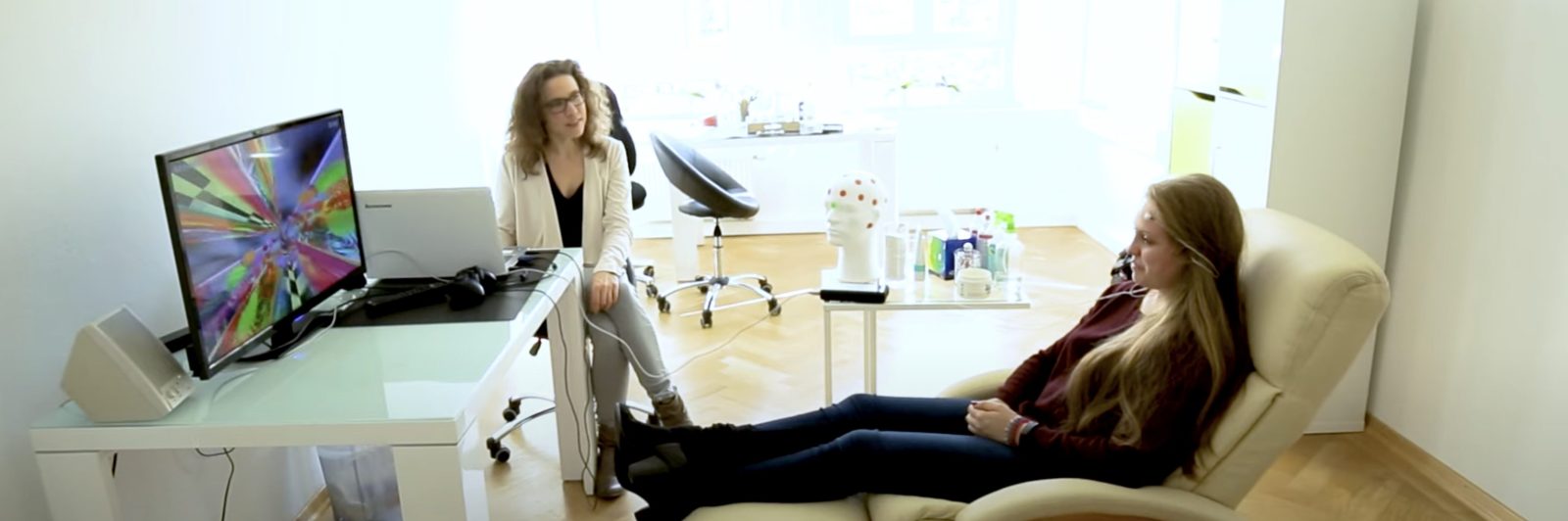
Possibly the most exciting aspect: experiencing ILF neurofeedback firsthand. Through our remote or in-person courses, you and a partner will create your own protocol! You will sit in the client seat and feel how these sessions can gently nudge your own nervous system toward experiences like: increased presence, focus, emotional regulation, lowered anxiety, and a more regulated state. This is where the lightbulbs go off—when you see (and feel!) just how transformative these infralow frequencies can be.
Sustaining Momentum Post-Course
Finally, we won’t leave you hanging after the course ends. We’ll discuss best practices for continuing education, troubleshooting common issues, and networking with other professionals using ILF. Neurofeedback is an evolving field, and your support network and ongoing mentorship make all the difference in providing world-class care. All ongoing training and resources will be covered in the course.
Your Skills After Completion
- Confidently Use 2-Channel ILF-Neurofeedback
Offer your clients a tool that supports sustainable, long-term improvement.
- Select & Adapt Treatment Protocols
Tailor your approach to each client’s specific needs, whether clinical or performance-based.
- Facilitate Better Self-Regulation
Help reduce symptoms of mental illness and prime clients for more effective therapeutic work.
- Feel the Lightness in Daily Practice
See how seamlessly Neurofeedback fits into your workflow, often easing the intensity of clinical challenges.
Highlights of the Course
- 10% Off When You Register with a Partner From Your Office (email courses@healpsychotherapy.ca to register with a partner)
Reduce costs and strengthen teamwork in your practice by enrolling together.
- Hands-on Learning with Medical Grade FDA-Cleared ILF Systems (delivered to you for remote courses, or on-site for in-person training)
Feel confident in your investment! You are accessing powerful technology from world-renowned scientists in the field.
- Breadth of Engaging Information
Enjoy a dynamic mix of theoretical instruction and hands-on practicum to keep you fully engaged.
Join us, and discover how Neurofeedback can empower both you and your clients. Whether you’re a beginner or looking to brush up on your existing skills, this 5-day neurofeedback course will open the door to transformative, neuroscience-driven interventions in your practice. Let’s redefine mental health support together!